By Emi Moss
Staff Writer
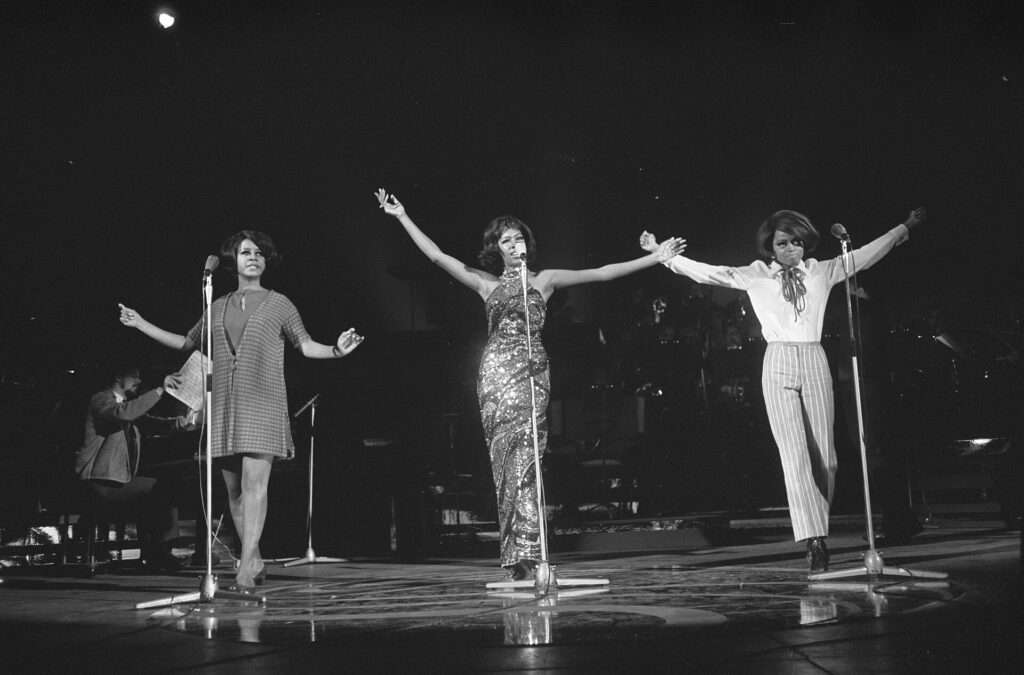
The Supremes performing
The closing act for the Grammys this year was a tribute led by Lauryn Hill to D’Angelo and Roberta Flack, two very influential Black artists who had passed this last year. The stage was full of energy as artists such as Lucky Daye, Bilal, and Chaka Khan celebrated their memory by performing some of their biggest hits. As we enter Black history month, I wondered what artists in the past had played a role in shaping the music we hear today.
Billie Holiday
Billie Holiday gained popularity in the late 1930s and became one of the most emotionally expressive vocalists in jazz. In a genre dominated by male instrumentalists, she used her voice as an instrument, bending rhythm and phrasing to convey deep emotion. Although the name is familiar to many, Billie Holiday is very rarely recognized for her major contributions to jazz. She also influenced many artists including Frank Sinatra. According to Frank Sinatra’s son, Billie Holiday was one of his greatest influences.
John Coltrane
John Coltrane played a key role in expanding the boundaries of jazz during the 1950s and 1960s. Known for developing the “sheets of sound” technique, Coltrane used rapid, flowing runs to create a dense and flowing musical texture. His album Giant Steps and his collaborations with Miles Davis and Thelonious Monk reshaped jazz improvisation. Coltrane’s influence shows how Black artists have continually pushed genres forward through technical innovation. In his case, he innovated the sheets of sound.
Jimi Hendrix
Jimi Hendrix revolutionized rock music by redefining the electric guitar. Through his heavy use of distortion, feedback, and effects, Hendrix helped pioneer psychedelic rock and changed the sound of modern guitar playing. His performance at the Monterey Pop Festival in 1967 introduced audiences abroad to a more experimental and immersive form of rock music. R.J. Reynolds High School music teacher Micheal Chamis said “His knowledge of Blues and electric guitar mastery became blended into all of the amazing music coming out of London in 1967-1968.” Hendrix’s legacy continues to influence rock, alternative, and hip-hop artists today.
The Supremes
Formed in Detroit under Motown Records, The Supremes became one of the most successful vocal groups of the 1960s. Hits like “Baby Love” and “Stop! In the Name of Love” remain classics. As the first Black female group to achieve multiple number-one hits, they helped define the Motown sound and brought Black women to the forefront of American pop music. They had success outside of their intended audience, reaching all different types of listeners across America.This achievement was both remarkable and significant, particularly given that it took place during the era of segregation.
Bob Marley
Bob Marley helped transform reggae, Jamaica’s local style, into a genre enjoyed by many around the world. Through his music, he promoted messages of peace, resistance, and social justice rooted in Rastafarian beliefs. RJR freshman Ari Dove noted that Marley’s influence extends beyond his own career, “His family is full of musicians like Ziggy Marley, Skip Marley, and YG Marley” Dove said. Songs like “One Love” and “No Woman, No Cry” are some of his greatest hits.
Prince
Prince was a genre-defying artist who blended funk, rock, pop, and R&B into a sound that was entirely his own. As a talented multi-instrumentalist, he often wrote, produced, and performed his music independently. “Prince influenced the Black music industry by introducing expressiveness in pop and rock and being able to mix the two really well,” RJR sophomore Imara Smith said. “He laid the blueprint for artists to be experimental and tap into different characters through their music.” Prince’s influence is still present in modern funk, R&B, and alternative music.
Michael Jackson
Michael Jackson, widely known as the King of Pop, reshaped the global music industry. He revolutionized music videos by turning them into cinematic experiences. He also set new standards for performance, touring, and album promotion. His influence can be seen across genres through dance and stage presence. His impact extends far beyond music into fashion and popular culture.
These artists, including Billie Holiday, John Coltrane, Jimi Hendrix, The Supremes, Bob Marley, Prince, and Michael Jackson did far more than create popular music. From jazz and reggae to rock, pop, and hip-hop, Black artists have consistently created the sounds that define future generations. The artists highlighted in this article represent just a fraction of that influence, but each one helped open doors for those who followed. The perspectives shared by students highlight that these artists are not distant figures but ongoing influences shaping how music sounds, feels, and functions today.