By Mackenzie Acker
Features Editor
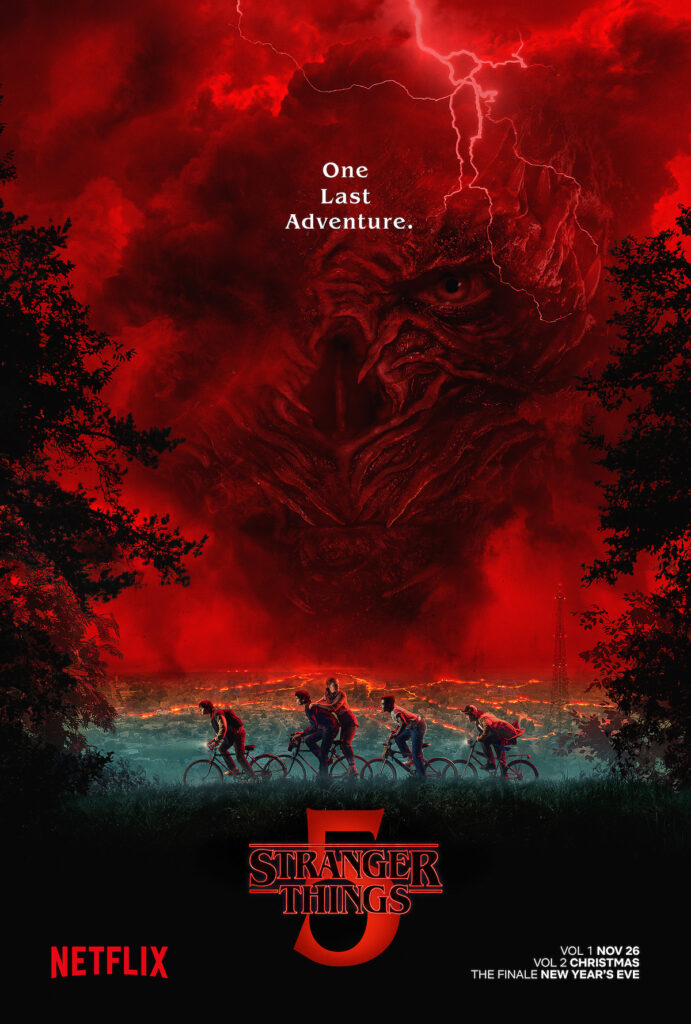
“One Last Adventure” Poster for Stranger Things’ final season.
Pointless heart-to-hearts, CGI, wigs, and… no demogorgans. These interesting choices categorize a finale so disappointing that fans haven’t seen a stranger thing.
Stranger Things has been on a long road to its finale, which premiered this winter. The show first aired on Netflix in 2016. It was one of Netflix’s first big hits as an original show, and it quickly garnered huge success. The show amassed millions of viewers and became profitable in all areas, from merchandise to fan experiences.
But despite its monetary success, Stranger Things was not your typical commercialized show. It took huge creative risks by starring kids as the main characters and exploring an imaginary sci-fi world. Because Netflix was not as established at the time of the show’s airing, executives were looking for fresh stories and gave creative freedom and funding to lesser-known writers such as the Duffer Brothers, who created the show. It instantly received a cult following and dedicated fans. Fans who, ten years later, would hugely criticize the final episode.
The finale of Stranger Things has been considered an abysmal ending by many of its fans. The critiques have been loud and incessant, criticizing the plot holes, battle sequences, and writing choices. However, the true fault of the finale wasn’t found in its two-hour run time. In fact, the finale itself is a good episode of television. The audience follows an action-packed sequence of fighting, mixed in with the much-awaited backstory of the show’s main villain, Vecna. It ends sweetly with sentimental anecdotes about the characters’ futures, passing the torch to new generations. There are, of course, subpar moments in the episode and in the last season generally. However, I believe the reason so many are disappointed isn’t because of the show’s faults, it’s actually because of the show’s greatness.
The earlier seasons of Stranger Things were huge successes for a reason. The show wasn’t just a sci-fi ’80s gimmick. Season one took a close look at how a family can be affected by tragedy, diving deep into characters’ arcs; a storyline reflected in the thematic visuals. The audience got to see a version of the 80s that was grungier and gray. It wasn’t a show that glamorized this period; it examined it, showing the times’ biases towards certain groups labeled “outsiders”. Viewers fell in love with these outsiders, adoring the characters and investing in their arcs. The show also had a palpable “stick it to the man” vibe. Kids ran from the police, and small-town people fought against government forces and a corrupt lab, all for the love of their family. All of these factors added mystery, love, and depth, characteristics that were absent in the finale.
When you examine the two side by side, these nuances are missing in the plot development, and also missing in the look of the show. The lighting of the final season has succumbed to the stereotypical “Netflix lighting” where everything is brightly and colorfully lit. You see the differences in the costume design, which feels less lived-in and more superhero-like. The dialogue is also different from earlier seasons; ideas are overexplained, and the jokes feel less natural. These critiques have been felt by the show’s creators. Harsh criticism has followed the finale, with fingers being pointed at the two Duffer Brothers. Still, the legacy of Stranger Things should not be defined by its finale alone. The series reshaped modern television and set a high creative standard that few shows have matched since. If anything, the disappointment surrounding the ending reflects how deeply audiences once connected to the story. In the end, Stranger Things will be remembered less for how it concluded and more for the impact it made along the way.