By Eden Escamilla-Brady
Staff Writer
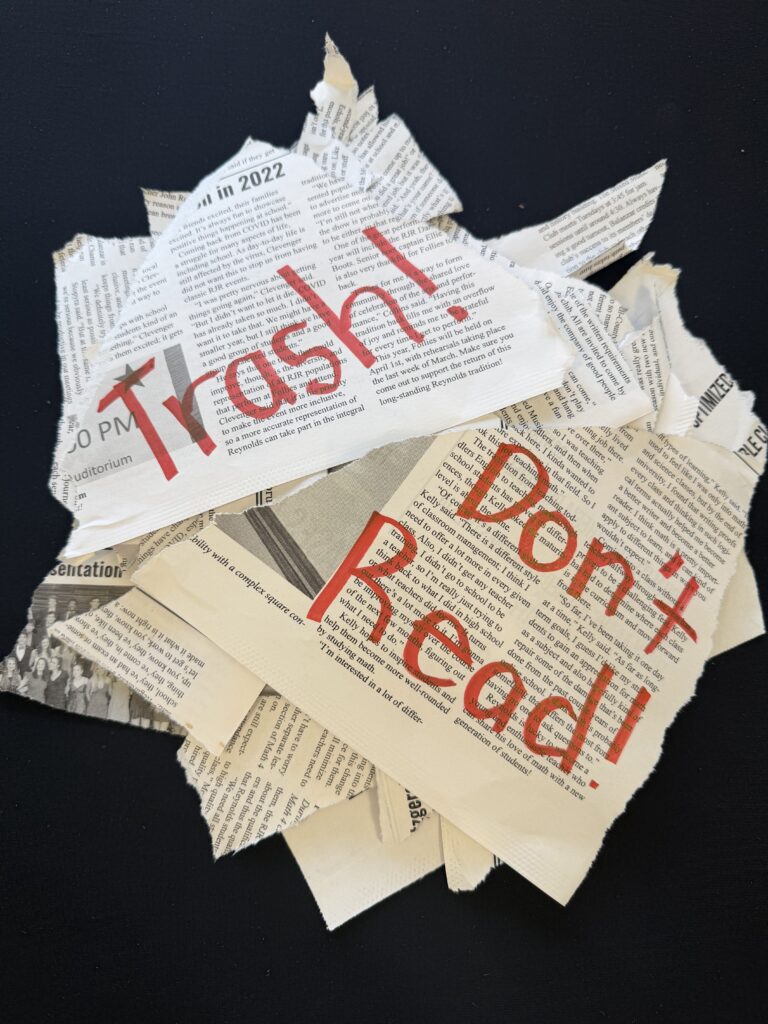
Pine Whispers paper gets disregarded and left to go to the trash instead of being read by students
In the newspaper, students sign up for the class with the hope that when we distribute the paper, people will read it and appreciate the weeks of hard work and dedication that go into producing our physical product. Not only does this involve writing a story, but also designing the paper, selling ads to pay for the printing process, and finally distributing it to the school. While many students on the R.J. Reynolds High School Pine Whispers Staff, such as myself, hope that people will enjoy and appreciate our hard work. It’s hard to ignore the plain and simple fact that not many people actually read the physical paper.
“If I’m being fully honest, I’ve never read the actual paper besides my friend’s articles,” sophomore Emily Calhoun said. “Like sometimes if I’m really bored, I’ll skim through it, but I don’t think I’ve ever fully read it.”
For the most recent edition that came out on February 25th, the newspaper staff had been working on all aspects of creating a good final product. From brainstorming article ideas to finally distributing the paper to the school, the work lasted for weeks. When the paper finally came out, the staff spent the entire class period going from classroom to classroom and even to every lunch period to distribute our hard work. We went through all of this effort just to be met with quite a few outright rejections and many newspapers on the ground, unopened by the end of the day.
Even with the decline in the common use of printing papers, some students still read our stories and try to appreciate the hard work and dedication we put into the paper.
“I try to read the paper every time they are offered to my class because I know the people in that class work hard to produce the paper, but sometimes I just look at the stories on the website,” senior Quinn Crater said.
In a time where getting information about current events is as easy as a simple search on Google, it is much more difficult to get well-researched news that gives correct information instead of information just created to get clicks or receive some form of reaction from people. In the RJR newspaper, we take the time to not only think about the most relevant story but also make sure to get the most accurate and up-to-date information. With the easy accessibility of getting information off the internet, accurate or not, it becomes harder to have people interested in print media because many people now choose easy accessibility over more researched information.
With the decline in the demand for news from a physical paper, this class has adapted to the demand for news online by creating a website for us to publish our works on. By doing this, we get more people to read the paper, but at what cost?
For years, physical print media has been people’s go-to way to stay informed about what is happening locally. The Pine Whispers has been around since 1923 and has served the Reynolds community faithfully.
Even with the many pros of the new digital age in many other areas of life, student journalism seems to be more hurt by this update than it is helped. The class periods are spent going over their rough drafts until they seem good enough to send in for editing, rushing to meet deadlines, finding the perfect title, and fixing last-minute mistakes. These stressful but worth it moments are starting to feel less worth it with each cycle published. A printed paper wasn’t just a source of news for the students in the class, but physical copies of the hard work and effort into a shared goal.
As journalism moves into a more digital space than a physical space, that sense of shared success risks fading. Instead, they are being replaced by something easier and not as meaningful to the people who work weeks on the perfect article. These new stories will be told, but the experience of creating them may never feel the same as the death of the paper progresses.